Search

Friday, September 25, 2009

Back to Top of Page DIMBULA Varieties of Ceylon Tea How it is manufactured Grading of Ceylon Tea How to Make that Perfect Cuppa Nutritional Value of Tea More on making that perfect cup History of Ceylon Tea Top of Page Like Nuwara Eliya, Dimbula is drenched by the monsoon during August and September and produces its best teas during the dry months of January and February. The teas are noted for their body and strength, and a powerful aroma. Characteristics: Long wiry beautiful leaves that give an exquisite taste, almost oaky, with body and strength. Brewing hints: Brew 1 teaspoon in a scant 1 cup water at 203 F. Infuse for 3-4 minutes. Drinking recommendations: Drink with milk as an afternoon tea. GALLE This area, in the south of the island, specializes in Flowery Orange Pekoes and Orange Pekoes that have well-produced, regular-size leaf and give an amber golden liquor with a scented aroma and a fine, gentle, subtle taste. Characteristics: Beautiful leaf that gives a smooth, perfumed liquor. Brewing hints: Brew 1 teaspoon in a scant 1 cup water at 203 F. Infuse for 3-4 minutes. Drinking recommendations: Drink with milk as an afternoon tea. NUWARA ELLYA Teas from the highest region on the island are often described as the “champagne” of Ceylon teas. The leaf is gathered all year round, but the finest teas are made from that plucked in January and February. The best teas of the area give a rich, golden, excellent quality liquor that is smooth, bright, and delicately perfumed. Characteristics: Bright brisk flavour and wonderful perfume. Brewing hints: Brew 1 teaspoon in a scant 1 cup water at 203 F. Infuse for 3-4 minutes. Drinking recommendations: Good at any time of the day with a little milk. RATNAPURA Ratnapura produces low-grown teas that are mainly used in blends, but also drink well alone with a little milk. Characterisitcs: Long-leafed tea that gives a slightly sweet aroma and a gentle smooth taste. Brewing hints: Brew 1 teaspoon in a scant 1 cup water at 203 F. Infuse for 3-4 minutes. Drink with milk as an afternoon tea. UVA Uva, on the eastern slopes of the central mountains, produces teas with a distinctive mellow flavor whose reputation stretches world-wide. The best teas are plucked between June and September The dry wind that blows towards Uva during this period gives the teas their fine taste and aroma. Charateristics: Copper-colored infusion with a very smooth, pronounced taste and wonderful aroma. Brewing hints: Brew 1 teaspoon in a scant 1 cup water at 203 F. Infuse for 3-4 minutes Drinking recommendations: A breakfast or day-time tea. Drink with milk. CEYLON BLENDS Following a tradition that was established at the end of the nineteenth century by Sir Thomas Lipton, several companies still market blended Ceylon teas as Ceylon Orange Pekoe or Ceylon BOP sometimes also by estate name, sometimes not. A good blend will give a bright, rich, coppery liquor with a brisk fresh flavor. In order to be sure of buying 100 percent Ceylon blended teas when buying pre-packed teas, look for the Ceylon Tea Board Lion logo. The principal production of tea in Ceylon (Sri Lanka, but the tea is referred to as Ceylon) is of black or fully oxidized tea. It is produced throughout the year, but the finest pluckings are in February and March, and again in August and September. The larger yield, though lower in quality, occurs during April, May, and June and again in October, November and December. In January the quality drops dramatically. Ceylon teas are divided into high, medium, and low grown. Of these, the high grown are of the very best quality and when coupled with the specific times of year (above paragraph) they can be stunning. Low to medium grown Ceylons have no particular distinction as far as leaf style is concerned but they do show (dependent upon leaf grade) good cup strength and color. The high grown leaf picked at peak times of the year also have these characteristics but there is much more delicacy in their flavor. CEYLON GREEN Ceylon is known, on the whole, for tea which has undergone the process which produces black tea (that is, fully oxidized). In recent years, the tea factories and tea estates have experimented with the production of Oolong and Green teas which are simply a style or process. Both the estates and factories had to gain the experience necessary to produce these styles of tea since Oolong and Green processed tea were primarily the domain of China and thus also the manufacturing know-how or experience. As the tea factory masters gained experience in the manufacture of Green-processed tea, their expertise improved dramatically. Therefore, in Sri Lanka during the first years samples of green teas were rejected because they (the tea masters) did not have the necessary expertise. However the investment in time and effort in learning the new process was well worth in that now a Ceylon Green from the Central Highlands pluck produces the very finest of the Ceylons. Tea leaves. Tea leaves nurtured by the sun A dew drop falling off the tip of a tea leaf in the morning The black, brown or green tea you enjoy in a cup is derived from this plant called the Camellia Senesis or Sinesis or Sansis
DIMBULA

Varieties of Ceylon Tea How it is manufactured Grading  of Ceylon Tea How to Make that Perfect Cuppa
Nutritional Value  of Tea More on making that perfect cup  History of Ceylon Tea Top of Page
Like Nuwara Eliya, Dimbula is drenched by the monsoon during August and September and produces its best teas during the dry months of January and February. The teas are noted for their body and strength, and a powerful aroma.
Characteristics: Long wiry beautiful leaves that give an exquisite taste, almost oaky, with body and strength.
Brewing hints: Brew 1 teaspoon in a scant 1 cup water at 203 F. Infuse for 3-4 minutes.
Drinking recommendations: Drink with milk as an afternoon tea.

GALLE

This area, in the south of the island, specializes in Flowery Orange Pekoes and Orange Pekoes that have well-produced, regular-size leaf and give an amber golden liquor with a scented aroma and a fine, gentle, subtle taste.
Characteristics: Beautiful leaf that gives a smooth, perfumed liquor.
Brewing hints: Brew 1 teaspoon in a scant 1 cup water at 203 F. Infuse for 3-4 minutes.
Drinking recommendations: Drink with milk as an afternoon tea.

NUWARA ELLYA

Teas from the highest region on the island are often described as the “champagne” of Ceylon teas. The leaf is gathered all year round, but the finest teas are made from that plucked in January and February. The best teas of the area give a rich, golden, excellent quality liquor that is smooth, bright, and delicately perfumed.
Characteristics: Bright brisk flavour and wonderful perfume.
Brewing hints: Brew 1 teaspoon in a scant 1 cup water at 203 F. Infuse for 3-4 minutes.
Drinking recommendations: Good at any time of the day with a little milk.

RATNAPURA

Ratnapura produces low-grown teas that are mainly used in blends, but also drink well alone with a little milk.
Characterisitcs: Long-leafed tea that gives a slightly sweet aroma and a gentle smooth taste.
Brewing hints: Brew 1 teaspoon in a scant 1 cup water at 203 F. Infuse for 3-4 minutes.
Drink with milk as an afternoon tea.

UVA

Uva, on the eastern slopes of the central mountains, produces teas with a distinctive mellow flavor whose reputation stretches world-wide. The best teas are plucked between June and September The dry wind that blows towards Uva during this period gives the teas their fine taste and aroma.
Charateristics: Copper-colored infusion with a very smooth, pronounced taste and wonderful aroma.
Brewing hints: Brew 1 teaspoon in a scant 1 cup water at 203 F. Infuse for 3-4 minutes 
Drinking recommendations: A breakfast or day-time tea. Drink with milk.

CEYLON BLENDS

Following a tradition that was established at the end of the nineteenth century by Sir Thomas Lipton, several companies still market blended Ceylon teas as Ceylon Orange Pekoe or Ceylon BOP sometimes also by estate name, sometimes not. A good blend will give a bright, rich, coppery liquor with a brisk fresh flavor. In order to be sure of buying 100 percent Ceylon blended teas when buying pre-packed teas, look for the Ceylon Tea Board Lion logo.
The principal production of tea in Ceylon (Sri Lanka, but the tea is referred to as Ceylon) is of black or fully oxidized tea. It is produced throughout the year, but the finest pluckings are in February and March, and again in August and September. The larger yield, though lower in quality, occurs during April, May, and June and again in October, November and December. In January the quality drops dramatically.

Ceylon teas are divided into high, medium, and low grown. Of these, the high grown are of the very best quality and when coupled with the specific times of year (above paragraph) they can be stunning. Low to medium grown Ceylons  have no particular distinction as far as leaf style is concerned but they do show (dependent upon leaf grade) good cup strength and color. The high grown leaf picked at peak times of the year also have these characteristics but there is much more delicacy in their flavor.

CEYLON GREEN
Ceylon is known, on the whole, for tea which has undergone the process which produces black tea (that is, fully oxidized). In recent years, the tea factories and tea estates have experimented with the production of Oolong and Green teas which are simply a style or process.  Both the estates and factories had to gain the experience necessary to produce these styles of tea since Oolong and Green processed tea were primarily the domain of China and thus also the manufacturing know-how or experience.  As the tea factory masters gained experience in the manufacture of Green-processed tea, their expertise improved dramatically.  Therefore, in Sri Lanka during the first years samples of green teas were rejected because they (the tea masters) did not have the necessary expertise.  However the investment in time and effort in learning the new process was well worth in that now a Ceylon Green from the Central Highlands pluck  produces the very finest of the Ceylons.
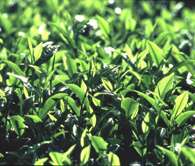
  Tea leaves.    Tea leaves nurtured by the sun  A dew drop falling off the tip of a tea leaf in the morning
The black, brown or green tea you enjoy in a cup is derived from this plant called the Camellia Senesis or Sinesis or Sansis

No comments:

Post a Comment